How the ride site is built
A 62-day bicycle journal (route, nights, money, photos and vlogs) published as a fast static site that costs nothing to host.
Why
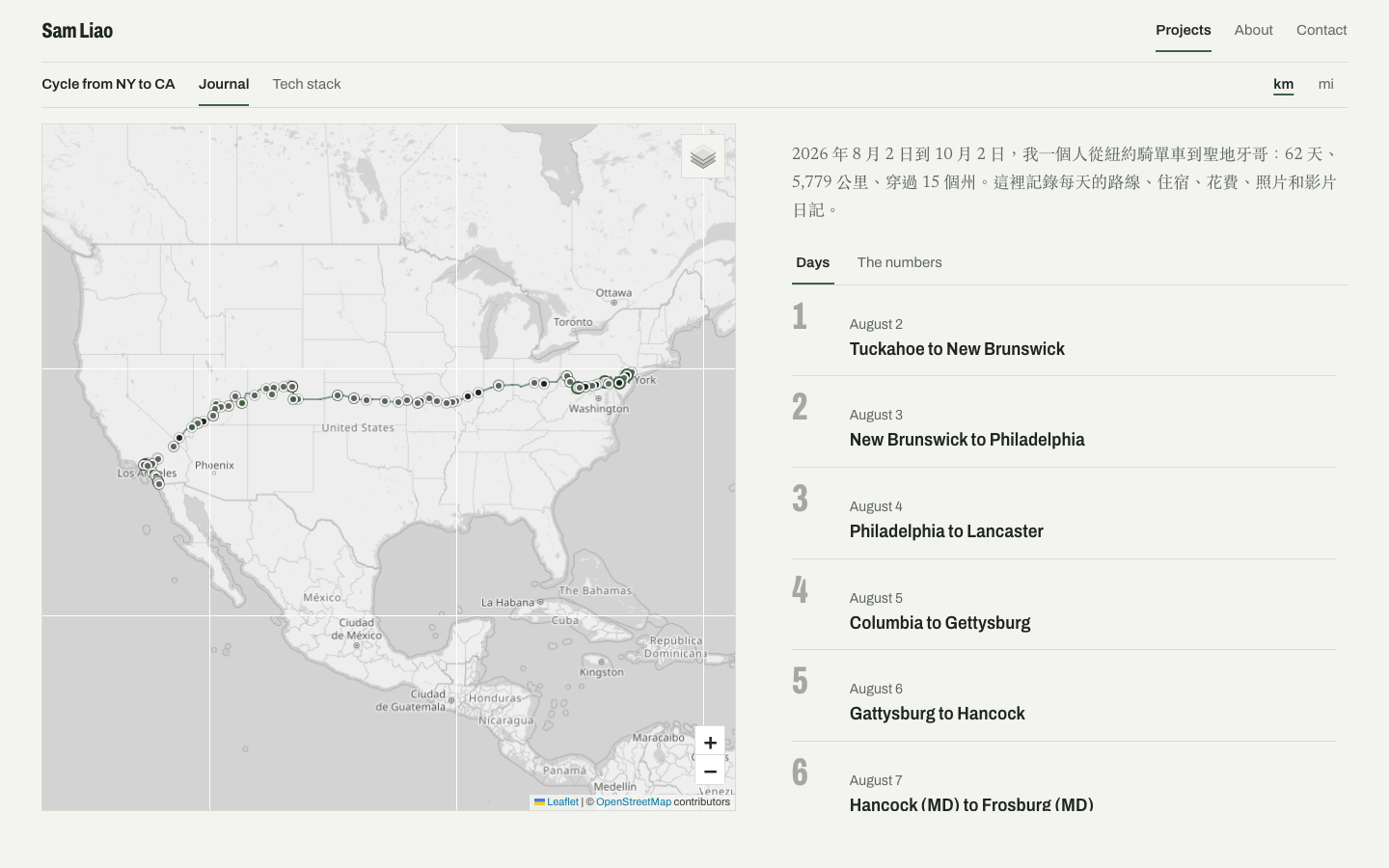
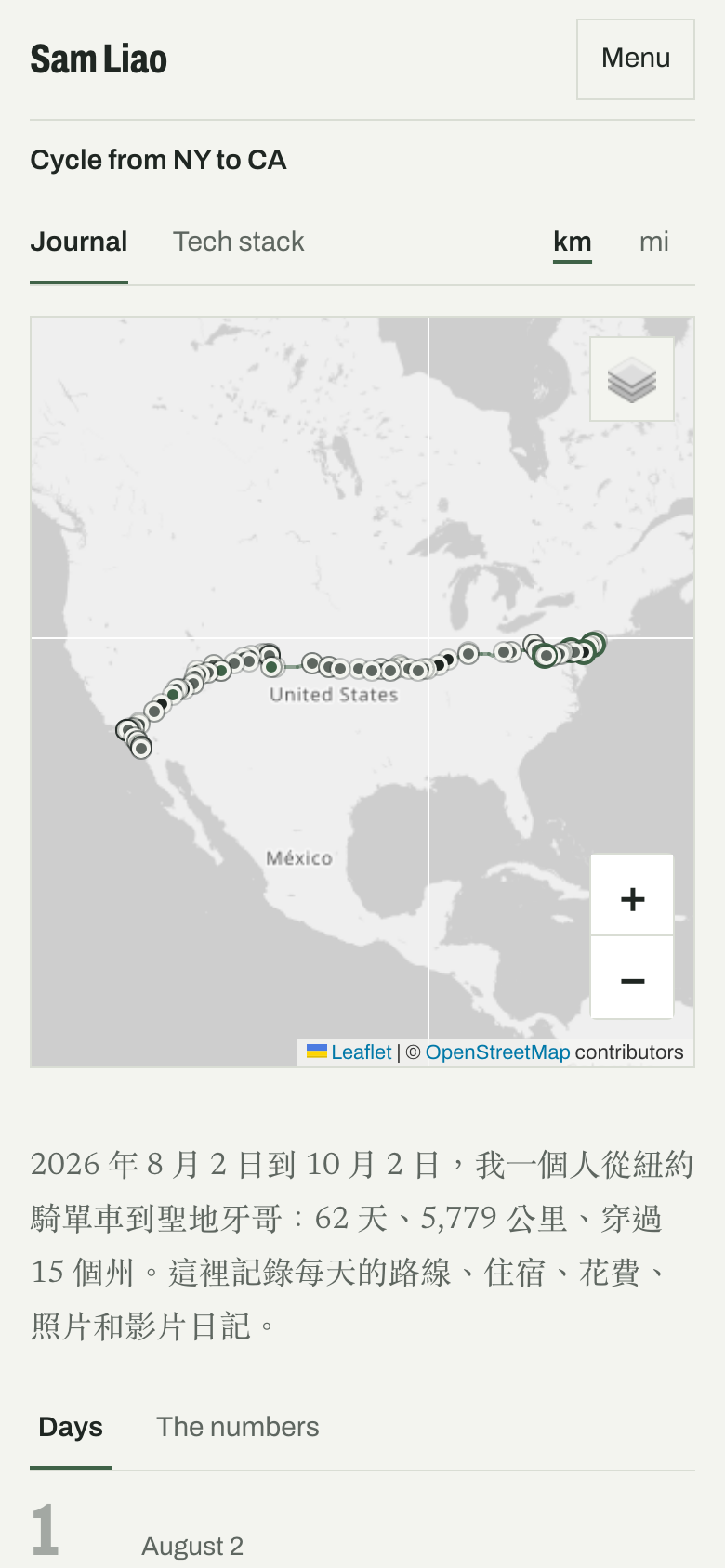
I rode from New York to San Diego between August 2 and October 2, 2026. I wanted one place for the route, where I slept, what I spent, the photos and the daily Instagram vlogs. It had to be easy for me to update from the road, and safe to publish without leaking bank details.
How it works
Decisions
A local editor and a static site
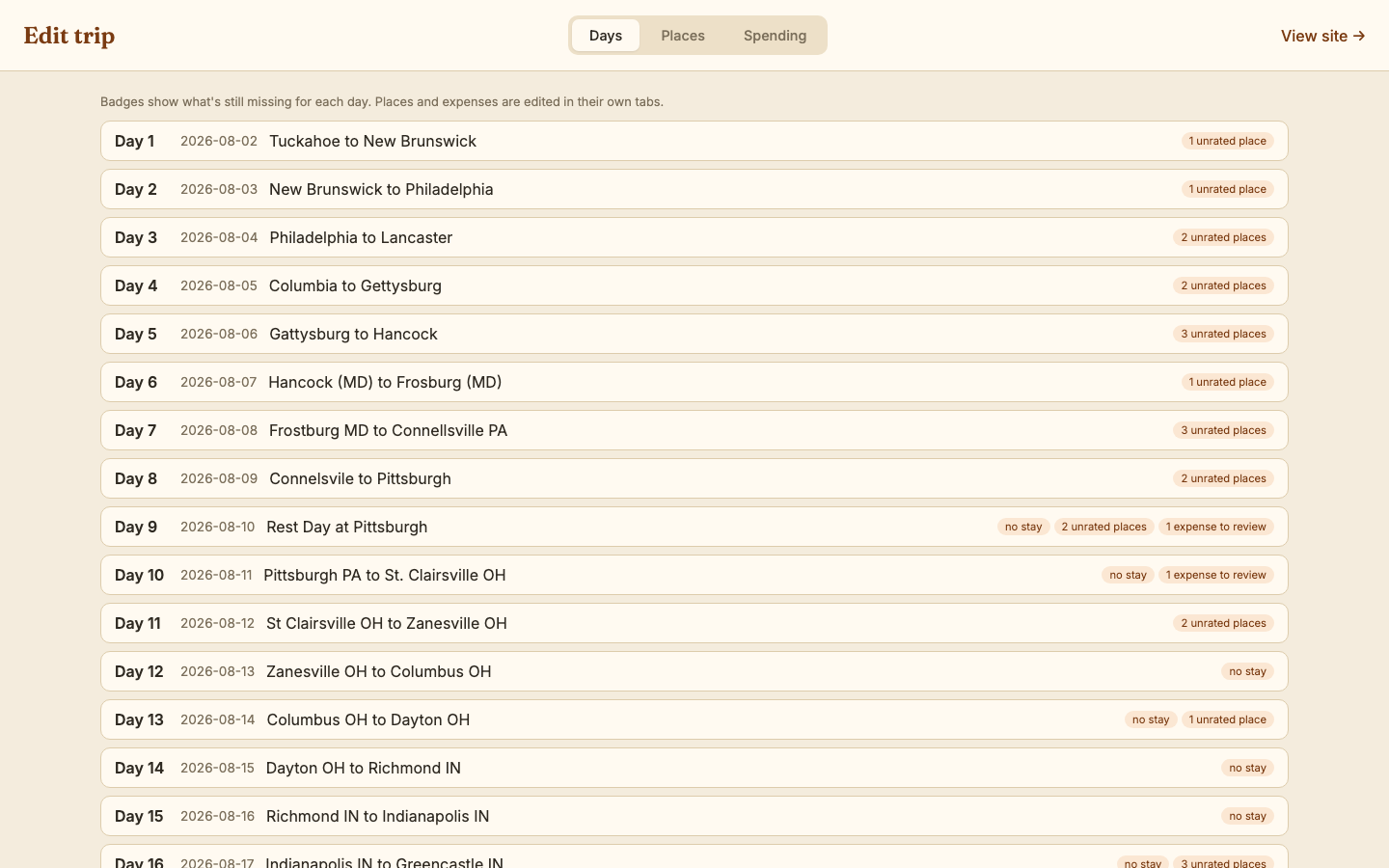
The editor is an Express app that only runs on my laptop. It writes JSON files and photos. The public site is plain HTML, CSS and JavaScript served as Cloudflare static assets. There's no server or database to attack, nothing to patch, and hosting is free.
An image pipeline built for phones
The editor accepts a whole folder of iPhone photos: it converts HEIC to JPEG, names them in order and records their size. At publish time each photo becomes three widths (800, 1600, 2400) served with srcset, keeping the color profile and stripping EXIF and GPS. Frames take the photo's own shape, so nothing is ever cropped.
Privacy by construction
The source data includes raw card statements. Publishing allowlists the public fields, drops private places and notes, then scans every file in the build for any forbidden string. If one is found, it deletes the build and fails. A leak has to get past a check that runs on every publish.
Data that can't be overwritten by accident
Every save writes a temp file and renames it, behind a write queue, so a crash never leaves half a file. An early bug let an old browser tab overwrite newer stories, so the editor now sends only the fields you actually changed.
Tested first
165+ tests run under node --test, covering the API, the publish step, statement parsing, units, the route map and the slideshow. Most were written before the code they test.
Screens
What I'd do next
- Run the tests and the leak check in GitHub Actions on every push.
- Use vector map tiles so the map can match the site's colors instead of a grey filter.
- Build Markdown posts into the same pipeline for a blog.